
The wrasse family is one of the most colourful and intriguing groups of fish found in UK waters. Known for their vibrant appearance and curious behaviour, wrasse species are a popular target for spearfishers starting out their journey towards sustainable seafood. This article will provide an in-depth look at the different wrasse species found around the UK, their key identifying features, habitat preferences, and interesting facts. We’ll also cover useful tips for spearos on how to successfully hunt wrasse.
Overview of Wrasse in UK Waters
Wrasse belong to the Labridae family and are widely distributed throughout UK coastal waters, especially around rocky reefs, kelp beds, and sheltered shorelines. There are several species of wrasse commonly found in the UK, with the most prominent being:
- Ballan Wrasse (Labrus bergylta)
- Corkwing Wrasse (Symphodus melops)
- Goldsinny Wrasse (Ctenolabrus rupestris)
- Rock Cook Wrasse (Centrolabrus exoletus)
These species all share some common characteristics, but they also exhibit unique features and behaviours, making them an exciting challenge for spearfishing.
Find out about the fish that sink – such as Wrasse and Bream.
Identifying Features of Wrasse Species
1. Ballan Wrasse (Labrus bergylta)
- Size: Ballan wrasse is the largest wrasse species in UK waters and can grow up to 65 cm in length, with some individuals weighing up to 4 kg.
- Coloration: They display a wide range of colours, typically green, brown, or red with intricate patterns of spots and stripes. Younger fish tend to be brighter in colour, while older fish can develop a more muted appearance.
- Fins: Ballan wrasse have robust fins, with a distinctive long dorsal fin that extends the length of their body.
- Other Features: Ballan wrasse have thick lips and strong teeth, which they use to crush hard-shelled prey such as crabs and mollusks.

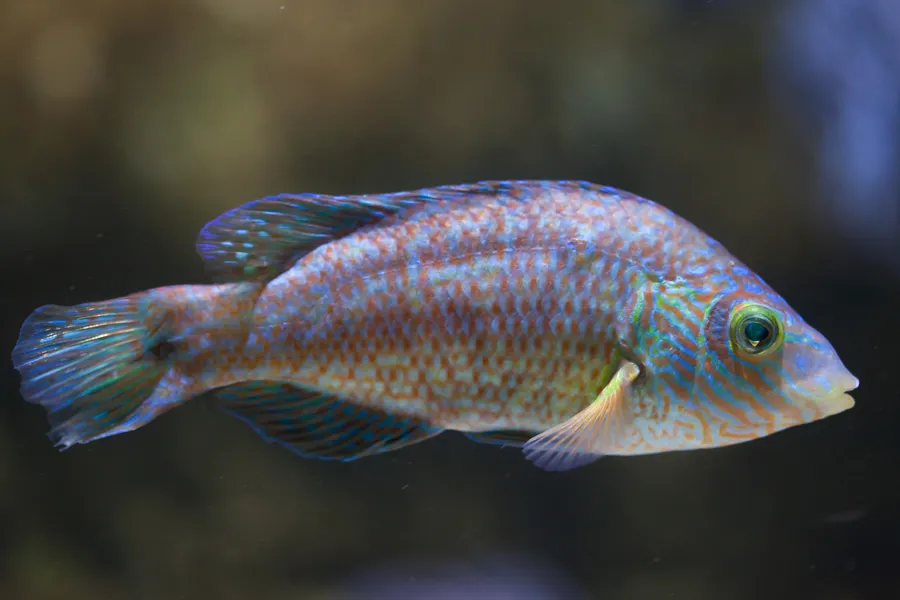
2. Corkwing Wrasse (Symphodus melops)
- Size: Smaller than the ballan wrasse, corkwing wrasse typically grow to around 20 cm, although larger specimens can reach up to 30 cm.
- Coloration: Corkwing wrasse are known for their iridescent, multi-coloured scales, often displaying hues of green, blue, and gold. Males tend to be more brightly coloured than females, especially during the breeding season.
- Fins: They have a more rounded dorsal fin compared to the ballan wrasse, and their tail fin is slightly forked.
- Other Features: They are easily identified by the dark spot located at the base of their tail fin and behind the eye.
3. Goldsinny Wrasse (Ctenolabrus rupestris)
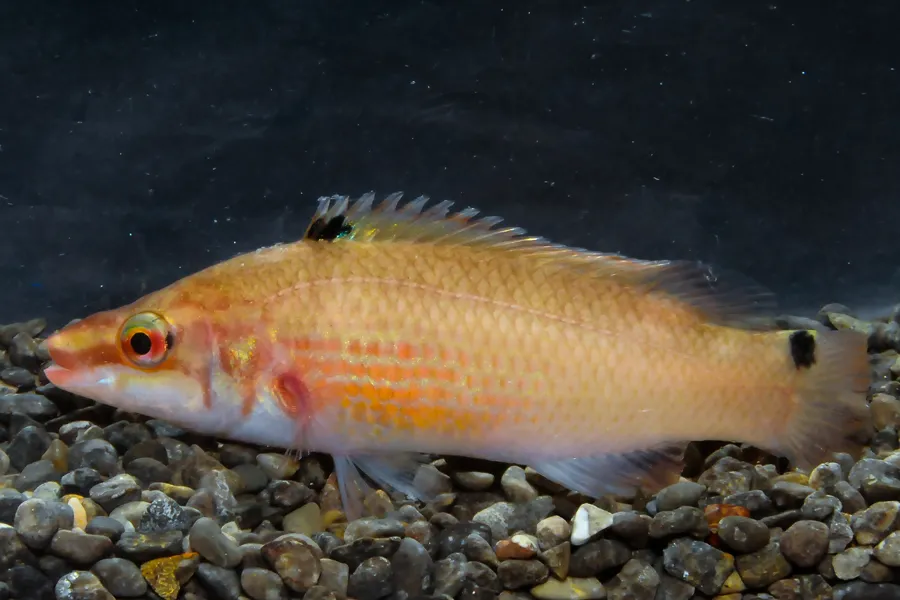
- Size: This is a much smaller species, rarely exceeding 15 cm in length. They are slim and torpedo-shaped compared to other wrasse.
- Coloration: Goldsinny wrasse are pale brown to golden in colour, with a yellow or orange tint along their sides. A characteristic black spot is visible at the base of their dorsal fin and tail fin.
- Fins: Their fins are relatively small and rounded, with a smooth, continuous dorsal fin running along their back.
4. Rock Cook Wrasse (Centrolabrus exoletus)
- Size: Similar in size to the goldsinny wrasse, they typically reach lengths of around 15-20 cm.
- Coloration: Rock cook wrasse have striking patterns of blue and green, with a more vivid display of colour during breeding season. They have a distinctive bluish-green sheen on their bodies and dark bands running along their sides.
- Fins: They have a long dorsal fin and rounded pectoral fins, which they use to manoeuvre quickly through kelp beds and rocky crevices.
Habitat and Distribution
Wrasse are primarily found in rocky coastal areas, where they can hide among crevices, boulders, and kelp forests. These environments provide them with ample shelter and food sources, including small crustaceans, mollusks, and various invertebrates.
- Ballan Wrasse: This species prefers deeper water along rocky reefs and kelp beds, usually in depths of 5-30 meters. They are most abundant along the south and west coasts of the UK, particularly in areas like Cornwall, Devon, and Wales.
- Corkwing Wrasse: Corkwing wrasse favour shallower waters, often found in rock pools and sheltered bays with lots of kelp. They are distributed along the south and southwest coasts, and can also be found around Scotland’s western isles.
- Goldsinny and Rock Cook Wrasse: These smaller wrasse species are typically found in shallower coastal waters, from 1-20 meters deep. They prefer areas with plenty of rock cover and are common in kelp forests. They are abundant along the western coastlines of the UK and Ireland.
Population in UK Waters
Wrasse populations in the UK are stable, and these species are not currently under any significant threat. In fact, wrasse play an essential role in marine ecosystems, particularly in kelp forests, where they help control populations of smaller invertebrates.
However, in recent years, there has been growing interest in using wrasse as “cleaner fish” in salmon aquaculture. Wrasse are introduced into salmon pens to feed on sea lice, reducing the need for chemical treatments. This has led to increased harvesting of wild wrasse populations for commercial purposes, which could potentially impact their numbers if not managed sustainably. The UK government and marine organisations are monitoring the situation closely. For more on UK wrasse populations and their conservation status, visit Marine Conservation Society and Seafish.
Interesting Facts About Wrasse
- Hermaphroditism: Many wrasse species are sequential hermaphrodites, meaning they can change sex during their lifetime. In some species, smaller individuals start life as females and later transform into males as they grow larger and more dominant.
- Long Lifespan: Wrasse are relatively long-lived fish, with some species, like the ballan wrasse, living up to 20 years.
- Powerful Crushers: Wrasse have specialised pharyngeal teeth, located in the back of their throats, that they use to crush the hard shells of their prey.

Spearfishing Tips for Wrasse
Wrasse are a popular target for those spearfishers starting out due to their abundance and their habitat in shallow, rocky areas, which are easily accessible to freedivers. Wrasse are curious and often very relaxed in the presence of a diver making them easier to hunt than other, faster moving, predatory fish like mackerel or seabass.
To prepare for your next spearfishing adventure, browse our collection of spearguns, wetsuits, and other essential gear.
- Best Time to Target: Wrasse are active throughout the year, but the best time for spearfishing them is during the spring and summer months when they are most active and feeding close to shore. The water is also warmer and visibility tends to be better during these months.
- Habitat: Look for wrasse around rocky reefs, kelp beds, and areas with plenty of underwater structures where they can hide. Wrasse are not fast swimmers and rely on camouflage and quick maneuvers to evade predators, so focus on rocky crevices and kelp-covered areas.
- Approach: Wrasse can be curious fish, especially the ballan wrasse. A slow and stealthy approach will often yield success. It’s not uncommon for wrasse to come closer to investigate divers, giving you the perfect opportunity for a clean shot.
- Shot Placement: Wrasse have tough bodies, especially larger ballan wrasse, so aim for the head or just behind the gills for the most effective shot.
- Sustainability: While wrasse are abundant, it is important to practice responsible spearfishing, especially with the increased demand for wrasse in the aquaculture industry. Always adhere to local regulations and consider catch limits to preserve their populations.
Sources
How do they taste?
Within the UK spearfishing community there’s ongoing debate about whether wrasse is truly worth harvesting for the table. Many spearfishers report that, although wrasse has a mild, non-fishy flavour, the texture can be disappointing – often described as soft or even “mashed-potato-like” rather than firm and flaky like traditional fish & chip shop cod.
At Start Point Spearfishing, our team has tried several species of wrasse and cooked them in different ways. The general consensus among us so far is that, while the flavour is pleasant enough, the texture usually lets it down and doesn’t justify targeting it as a food fish.
That said, plenty of our customers, from newcomers to highly experienced divers, believe wrasse is underrated and enjoy eating it regularly. There are also numerous preparation tips circulating, including soaking fillets in milk, chilling them overnight to firm up, making ceviche, or deep-frying to improve the texture.
In short, opinions are still divided. So, we’ve decided to run a more controlled test: we’ll prepare multiple wrasse species using a range of different cooking techniques to see whether we can achieve consistently firm, flaky results — and if wrasse deserves a place on the menu after all.
Watch this space…

Final Word
Wrasse are an eye-catching and commonly encountered species for UK spearfishers, known for their bright colours and curious behaviour around rocky reefs. While they may seem abundant and are often easy to approach, their culinary value remains a point of debate. Whether targeting the larger ballan wrasse or the smaller goldsinny and corkwing variants, gaining a solid understanding of their habitat, behaviour, and ecological role is vital for making informed and sustainable harvesting choices.
To prepare for your next spearfishing adventure, browse our collection of spearguns, wetsuits, and other essential gear.