

Spearfishing in the UK is often misunderstood, especially when it comes to its impact on fish populations. Unlike many other forms of fishing, spearfishing is a highly selective, low-impact, sustainable method when practised responsibly. With growing interest in ethically sourced seafood and sustainable foraging, it’s important to understand how spearfishing fits into the wider picture of UK marine conservation and fishery health.
This article explains how spearfishing affects UK fish stocks, why it is considered one of the most responsible ways to harvest fish, and what divers can do to keep their impact positive.
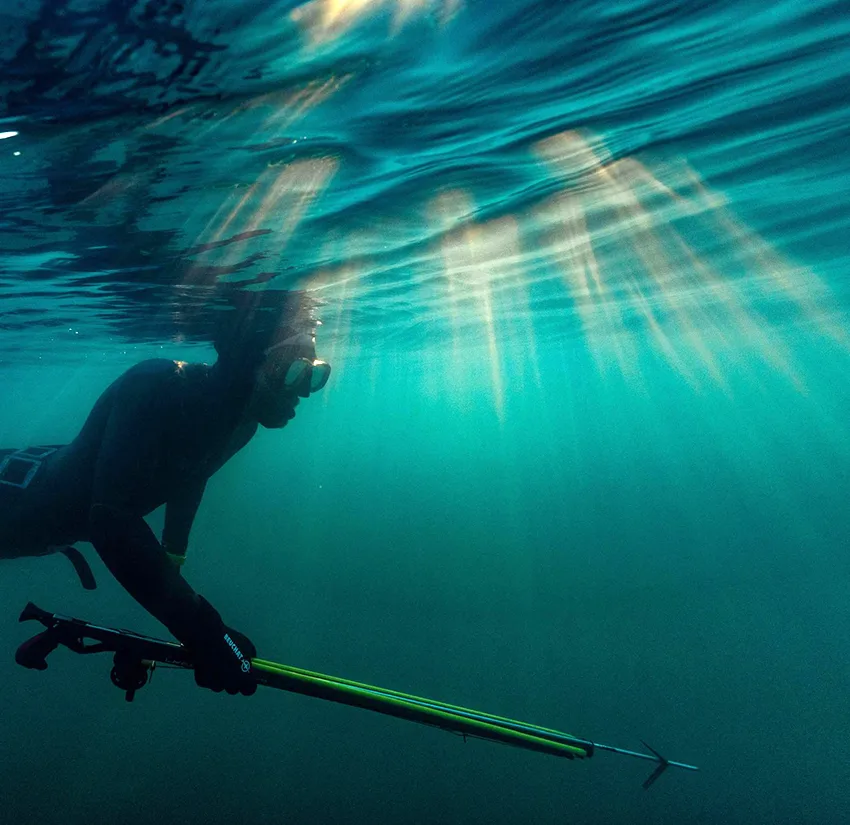
Is Spearfishing Bad for Fish Stocks?
In short: No, not when carried out within UK regulations and with responsible diver behaviour.
Spearfishing is regarded as one of the least damaging methods of taking fish or seafood because:
- it is entirely selective
- there is no by-catch
- fish are taken one at a time
- there is no lost gear, unlike angling hooks, lead sink weights or nets
- divers typically target common, plentiful species
These traits make spearfishing fundamentally different from commercial fishing and even recreational rod and line fishing.
Why Spearfishing Is Considered Sustainable
Spearfishing has several built-in limitations that naturally protect fish numbers.
- It is 100% selective
The diver sees the fish before taking the shot, meaning:
- no juvenile fish are taken
- no protected species are harmed
- no unwanted species are caught accidentally
- good breeders can be left alone
Selectivity alone dramatically reduces ecological impact.
- Low catch volume
The spearfishing culture in the UK is to only take what you need, and you can only catch as much seafood as you can physically dive for. This places a natural cap on harvest compared to nets or large-scale angling efforts. - No habitat damage
Spearfishing causes zero seabed impact, unlike dredging, trawling or poorly placed lobster pots. - No ghost gear
Lost hooks, nets and lines can kill fish and marine life for years. A speargun cannot continue harming the environment if dropped or lost to sea. - No post-catch mortality
Angling creates “unrecorded deaths” from gut-hooking, stress or deep-water barotrauma. Spearfishing avoids this entirely.
What UK Species Are Commonly Targeted?
Spearfishers typically target abundant, fast-growing species, such as:
These species are resilient and, when local bylaws are respected, spearfishing pressure has minimal impact on overall stock health.


Where Spearfishing Can Have Localised Impact
While spearfishing is broadly sustainable, localised pressure can occur if divers:
- Continuously target the same reef
- Take multiple fish from small, isolated structures
- Take breeding-sized fish during key seasons
- Ignore minimum landing sizes
- Take wrasse in areas where they play a key ecological role
Awareness and self-regulation are essential, particularly in heavily dived regions.
Legal Protections and Minimum Sizes
The UK has strict minimum landing sizes and regional bylaws that help protect fish stocks. Spearfishers must always adhere to:
- Minimum legal sizes (bass, pollack, plaice, etc.)
- Seasonal bass restrictions and bag limits
- No-take zones, UK MCZs and local bans (see designated UK MCZs)
- Bans on spearfishing salmonid species (salmon and sea trout)
These rules exist to ensure long-term sustainability and healthy ecosystems.
How Spearfishers Can Protect Fish Stocks Further
Responsible divers go beyond the legal minimum. To keep spearfishing sustainable:
Choose your shots carefully
Aim only at fish you intend to eat and are confident you can land cleanly.
Avoid breeding aggregations
If you find a nest, large shoal, or feeding frenzy, observe it but do not take advantage of it.
Rotate your spots
Avoid repeatedly harvesting the same reef.
Take only what you need
Fresh is always best
Learn local ecology
Understanding species behaviour helps you make informed, respectful choices.
Does Spearfishing Help Conservation?
In many ways, yes.
Spearfishers are extremely in tune with local marine environments. They notice changes in:
- fish populations
- breeding patterns
- invasive species
- habitat health
- water quality
Many spearfishers contribute valuable citizen science observations and support marine conservation efforts. Knowledgeable divers often advocate strongly for marine protection because they directly witness environmental change.

Final Thought
Spearfishing, when practised responsibly, is one of the most sustainable and selective ways to harvest seafood in the UK. It respects the environment, avoids bycatch, and encourages divers to understand and protect the ecosystems they interact with.
Sustainable spearfishing isn’t about taking more – it’s about taking better. Better choices, better awareness, and better respect for the sea.