Posted on

Responsible Spearfishing Behaviours: How to Dive Ethically and Sustainably in the UK

fishing sustainably in the UK

Spearfishing and coastal foraging is one of the most selective and sustainable ways to harvest wild food, but only when practised responsibly. As spearfishing grows in popularity across the UK, it’s vital that divers uphold behaviours that respect the ocean, protect fish stocks and maintain the reputation of spearfishing as an ethical practice.

This guide outlines the key behaviours that responsible spearfishers should follow, from respecting minimum sizes to avoiding feeding frenzies. Each principle supports the long-term health of British marine ecosystems and ensures spearfishing or underwater foraging and hunting remains a low-impact, environmentally sound activity.

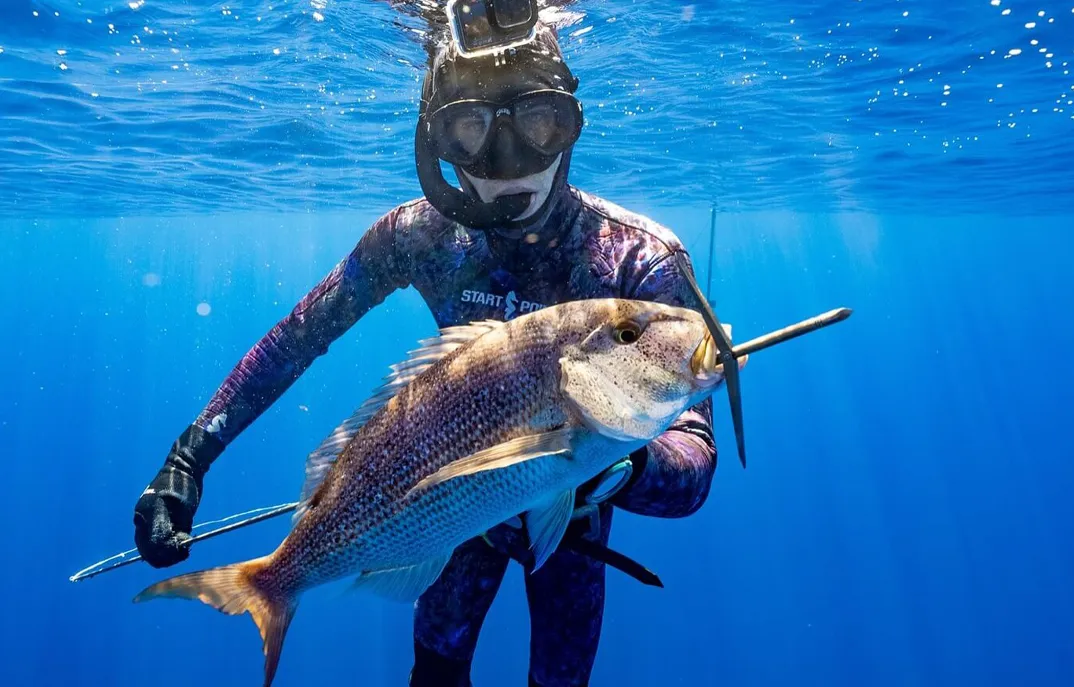
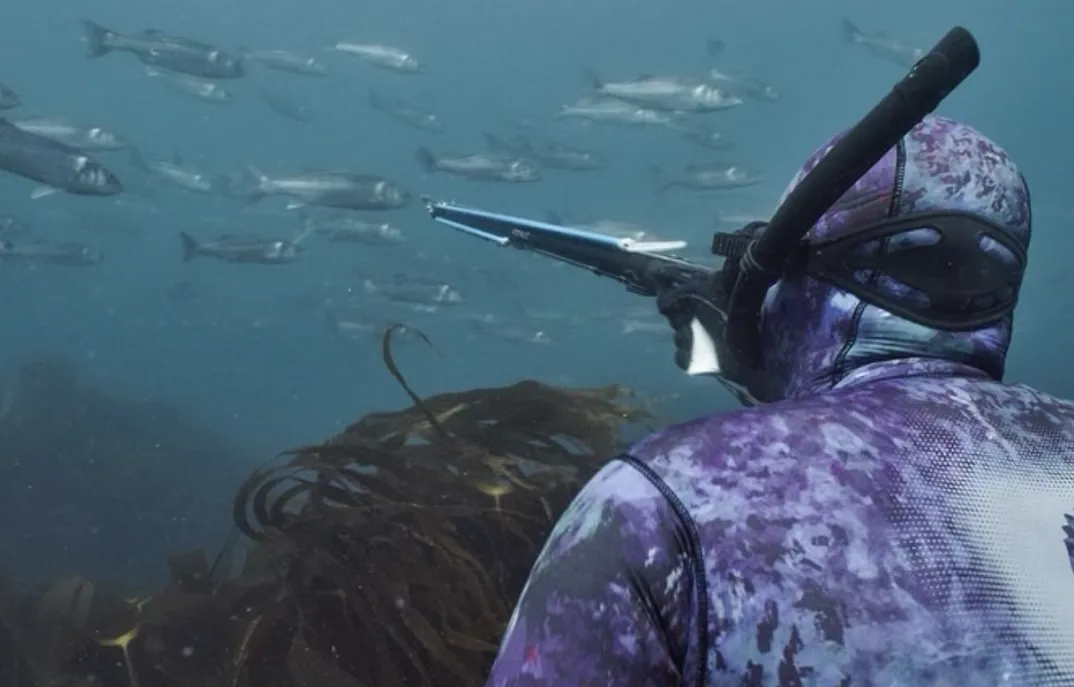
Person having speared fish under water with a Start Point wetsuit

1. Take Only What You Intend to Eat

Responsible spearfishing and underwater foraging is built on intention.

  • Take one fish at a time.
  • Prioritise fish you will genuinely use, whether fresh or frozen for later.
  • Avoid taking fish just because they are easy or plentiful.

Spearfishing’s strength is that it is entirely selective whereby divers choose exactly which fish to take. This advantage disappears if you take fish simply because you can.

Spearfishing’s strength lies in its selectivity – you choose which fish to take and how many. Freezing fish you’ve caught yourself can still be far more sustainable than buying seafood from environmentally damaging commercial sources. What matters is taking fish with purpose, not impulse.

Learn more about whether freezer filling is considered the responsible, sustainable thing to do by checking out our blog on: Stocking the Freezer: Is It Responsible for UK Spearfishers

spearfisher in UK

2. Respect Minimum Sizes and Local Bylaws

The UK has strict size limits and regional restrictions, particularly for:

  • bass
  • lobster
  • flatfish species
  • crab
  • scallops

Spearfishers must also be aware of:

  • seasonal bass restrictions
  • localised bans or MCZ (Marine Conservation Zones) or NTZ (No Take Zones)
  • the complete prohibition on taking salmon or sea trout

These rules exist to protect breeding stocks and ensure sustainability. Staying informed is an essential part of being a responsible diver.


3. Avoid Feeding Frenzies

Feeding frenzies are dramatic, exciting, and very tempting, but shooting fish during these events is not responsible.

Why?

  • The fish are not behaving naturally.
  • They are unusually easy to shoot.
  • Many individuals are concentrated in one tiny area, creating the risk of over-harvesting a local group.
  • Some “frenzies” are actually pre-spawning gatherings.
  • It encourages a ‘take more because they’re easy’ mentality, which contradicts selective fishing principles.

The better approach

Watch the frenzy. Learn from it. Enjoy the spectacle. But take your shot later, once behaviour returns to normal and you can make a thoughtful, selective decision.


4. Rotate Your Spots

Repeatedly taking fish and other seafood from the same reef, gully or headland can cause local depletion even if regional stocks remain healthy. Responsible foragers & spearfishers:

  • move between multiple locations
  • avoid hammering the same reef
  • allow spots time to recover

Rotating sites keeps your own fishing or foraging productive and protects local fish and crustacean populations.


5. Only Take Clean, Ethical Shots

A responsible spearfisher always prioritises clean, effective shots that aim to kill the fish instantly. This means:

  • don’t shoot if you’re unsure of your angle or range
  • don’t shoot into a shoal or cluster
  • aim only at the fish you have fully identified and intend to keep

Missed shots and poorly placed shots harm fish and damage the image of spearfishing. If in doubt, don’t pull the trigger.

Top Tip:

Before pulling the trigger, fully extend your shooting arm and lock it comfortably in line with your shoulder. This helps you absorb any recoil, stabilises the gun, and keeps the shot accurate and controlled.


6. Respect Breeding Behaviour

Many UK species show clear reproductive behaviours, such as:

  • nest guarding
  • pairing
  • pre-spawning schools
  • territorial summer behaviour

Avoid taking fish that are actively breeding or displaying protective behaviour. These individuals are vital to maintaining healthy populations.

7. Respect Marine Life You Are Not Targeting

Responsible divers avoid disturbing or harming:

  • juvenile fish and breeding or egg bearing individuals.
  • rays, seahorses, pipefish and other vulnerable or protected species.
  • seals, dolphins and porpoises – never approach or interact.
  • seabirds resting on ledges or feeding in shallow bays.
  • sensitive habitats such as seagrass beds, soft corals and sponge-covered reefs.

The rule is simple: take what you came for, leave everything else undisturbed. Spearfishing is about taking fish selectively, not interfering with the wider marine environment.


8. Keep the Sea Clean

Spearfishers spend more time in the water than most ocean users, which makes them perfectly placed to help keep our coastline cleaner. Removing small pieces of litter when it is safe to do so can make a real difference to the health of marine habitats.

However, it is vital to only collect debris that poses no risk of entanglement or injury. Items like plastic wrappers, bottles or stray bits of line are usually safe to remove, but larger gear, especially ghost nets, sections of rope, or heavy pots can be extremely dangerous. These can snag, wrap or trap a diver.

If you encounter anything that looks hazardous, do not attempt to free or remove it yourself. Instead, note the location and report it to your local IFCA (Inshore Fisheries and Conservation Authority), and contact an organisation like Ghost Fishing UK or Water Haul who can arrange safe and proper removal using the correct equipment. This keeps both divers and marine life safe.

A responsible spearfisher leaves the sea in a better state than they found it – but never at the expense of their own safety.

Final Word

Responsible spearfishing is not just about the fish you take, it’s about how you take them. By practising restraint, respecting local ecosystems and avoiding behaviours like exploiting feeding frenzies, spearfishers can continue to enjoy a sustainable, ethical and deeply rewarding relationship with the sea. Good divers don’t just catch well. We behave well. And that’s what keeps spearfishing and underwater foraging sustainable.
Posted on

Stocking the Freezer: Is It Responsible for UK Spearfishers?

sustainable UK spearfishing

As spearfishers, we take pride in harvesting our own food. But as winter approaches, when storms, swell, poor visibility and short days limit our time in the water, many of us wonder whether stocking the freezer is responsible or not.

The short answer is: yes, it can be, provided we approach it with intention, awareness and respect for the ecosystems we rely on. This article looks at the benefits, potential pitfalls and best practices for freezing fish responsibly in the UK.

READ: Sustainable fishing as defined by the Marine Stewardship Council


Is Freezing Fish Sustainable?

Freezing your own catch is still one of the most sustainable ways to secure high-quality seafood for the months ahead. When we compare it to the alternatives – imported farmed fish, trawled species, long-distance supply chains, or supermarket meat – wild-caught fish taken by a responsible spearfisher is usually the greener option.

Spearfishing remains selective, low impact and naturally limited by:

  • your breath hold
  • your fitness
  • weather and visibility
  • what you can physically carry
  • the time you choose to spend in the water

These built-in limits prevent over harvesting when we use good judgement.


The Benefits of Stocking the Freezer

You’re controlling the sustainability of your food
You harvested it, you know the species, the size, the area and the exact method. Few foods offer that level of transparency.

It reduces reliance on commercial fishing
When winter weather shuts down diving, many switch to shop-bought fish, often taken by methods that damage seabeds, operate unsustainably or generate huge bycatch.

It reduces the temptation to “make do” with poor choices
Having your own responsibly caught fish on hand means you avoid unsustainable meat and mass-produced seafood.

It encourages thoughtful planning
Freezing fish requires organisation: rotating catch, labelling species, only taking what you’ll actually use.


Where Stocking the Freezer Becomes Irresponsible

Like most things in spearfishing, it comes down to intention and restraint.

Freezing fish becomes irresponsible when:

  • you take fish simply because they are there
  • you shoot more than you realistically need
  • you revisit the same reef repeatedly
  • you target fish showing breeding behaviour
  • you use a “fill the freezer at all costs” mindset

The goal is to avoid slipping from purposeful harvesting into opportunistic taking.


How Much Is Too Much?

There’s no single number that applies to everyone – it depends on your household size, diet, diving frequency and how long winter conditions last where you live.

A responsible approach is to:

  • freeze only what you genuinely plan to use
  • diversify your catch rather than hammer one species
  • spread effort across different areas
  • respect minimum sizes and local bylaws
  • avoid clearing out multiple fish from the same small reef structure

Responsible freezer-filling is intentional, not excessive.


sustainable UK spearfishing

Make Every Shot Count

When stocking for the freezer, prioritise quality over quantity. Clean, ethical shots reduce waste. A precise shot:

  • kills instantly
  • protects fillet quality
  • reduces stress and bleeding
  • avoids damaging the fish needlessly

Missed or poorly placed shots harm fish populations and waste food – the opposite of responsible harvesting.

Store and Rotate Properly

Responsible freezing doesn’t end when the fish goes into the bag.

  • label each pack with species and date
  • vacuum seal or remove air to prevent freezer burn
  • use older packs first
  • avoid letting fish sit in the freezer for years
  • check for quality before eating

A little care goes a long way and ensures you don’t end up spoiling any of your catch. 


So, Is Stocking the Freezer Responsible?

Yes – when done with intention, restraint and respect for the sea. Freezing your own wild-caught fish is far more sustainable than buying mass-produced seafood or imported meat. It supports your own self-reliance and reduces pressure on commercial fisheries.

Being responsible doesn’t mean taking less than you need, it means taking exactly what you need, no more and no less.


Final Word

As spearfishers, we’re part of the ecosystem we harvest from, and the choices we make matter. Freezing fish for winter is absolutely responsible when we do it with awareness and purpose. If we rotate spots, choose clean shots and take only what we’ll genuinely use, we protect the very resource we depend on.

We are at our best when we act with intention – and when we remember that responsible spearfishing isn’t just something they do, it’s something we do together.

Posted on Leave a comment

Spider Crab Foraging: Everything You Need to Know

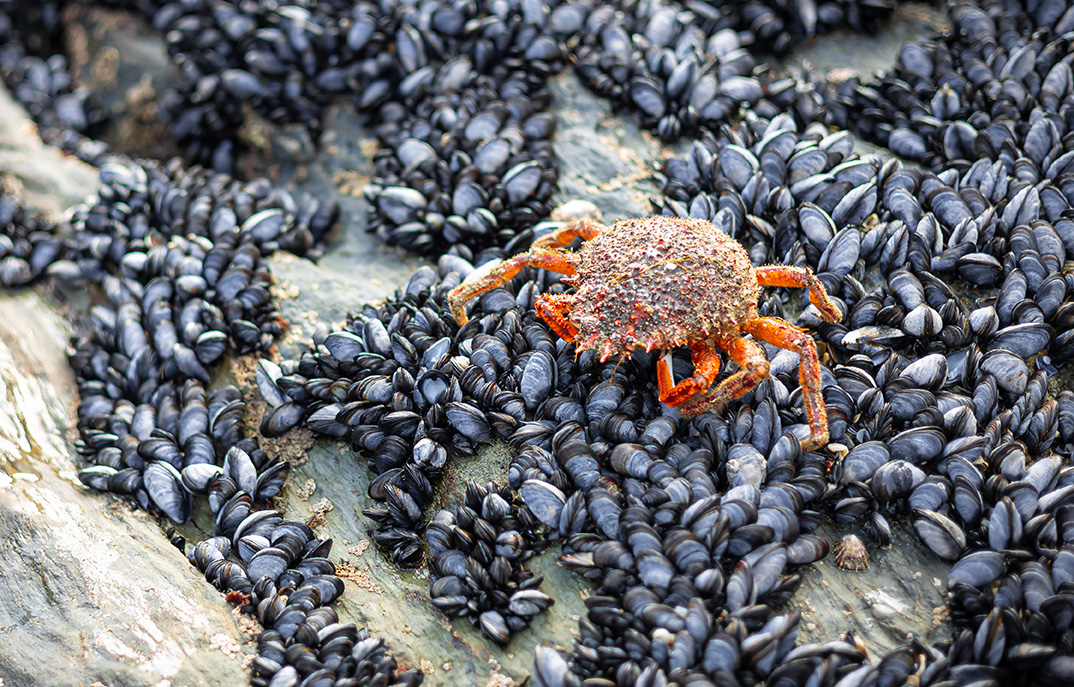
spider crab Britain

They’re here — and they’re not shy.

Every summer, spider crabs march into our shallow waters like silent invaders, arriving in huge numbers along the south coast. Their alien-like appearance might be intimidating, but for those in the know, they’re a seasonal delicacy well worth the effort.

But before you grab your bag and go, here are a few golden rules to make sure your spider crab foraging is sustainable, respectful, and tasty.

📏 Size Does Matter!

To protect young crabs and ensure a healthy population, the Devon & Severn Inshore Fisheries and Conservation Authority (IFCA) sets a legal minimum landing size of 130mm across the carapace (that’s the main shell).

Measure from between the eyes to the back of the shell — no legs, claws, or side measurements allowed.

🔧 Top Tip: Pick up a crab measuring gauge to make quick work of checking your catch.

🦀 The Max 3 Crab Rule

While some sources say “take what you need,” the legal recreational limit by the IFCA is set to three crabs of any species per day. That’s total — not just spider crabs.

So yes, that includes brown crabs, velvet swimmers, and more. Be mindful.

🔗 Apply for your Recreational Diving Permit here

If you’re diving (even freediving) for any crustaceans, including scallops, a permit is legally required. It’s a quick online process (costs just £20 for 2 years) and helps protect local stocks.


👀 Male or Female? Here’s How to Tell

Spotting the difference isn’t just a fun party trick — it’s crucial for sustainable foraging.

  • Male crabs tend to have larger, chunkier claws.
  • Females are generally more slender, with delicate pincers.

But the clearest way to tell?
Flip them over.

  • Females have a wide, rounded tail flap on their underside. This is where they carry their eggs.
  • Males have a narrower, pointed flap.

If you spot eggs tucked under that tail flap, you’ve found a berried female — and she’s strictly off-limits. These mothers-to-be are vital for future crab populations. Handle with care and return them gently to the sea.

Side-by-side comparison of a male and female spider crab underside. The male shows a narrow, bell-shaped tail flap, while the female displays a wide, rounded tail — swollen in appearance if carrying eggs.

🌊 Did You Know?

Spider crabs are long-distance travellers, migrating over 100 miles a year!

  • In autumn, they head to deeper waters.
  • Come spring, they return to the shallows — with females arriving first, followed by large males in early to mid-summer.

This is the perfect time to spot them — their slow, lumbering gait makes them easier to catch than you might think. Look around rocks, kelp forests, or any area with good cover.


🧼 Final Tips for Clean, Respectful Foraging

  • Bring a net bag for easy carrying — and ice your catch as soon as possible for best flavour.
  • Brush them off or rinse in seawater to remove mud and sand.

🍽️ Dispatching & Cooking Your Catch

Spider crabs have sweet, delicate white meat — especially in the legs and claws. Once cooked, the body can also be picked clean for fantastic bisques, curries, or crab cakes.

🔪 Need prep help? We love Seth’s respectful video on the best way to dispatch your Spider Crabs in a humane way, how to cool them and meat extraction.

Cooking:

  • Pan of hot salty water
  • Submerge your crab fully in the water
  • Cook on a boil for around 20 minutes
  • Pull the crab out and drain the water off
  • Leave for 5 – 10 minutes to cool.
  • Leave 30mins to pick all the meat out – follow this video

In Summary

  • ✅ Measure all crabs (130mm minimum across the carapace)
  • ✅ No more than 3 crabs per person, per day
  • ✅ Get your diving permit before harvesting crustaceans
  • ✅ Know your males from your females — and release berried females
  • ✅ Be respectful, gentle, and take only what you’ll eat

Spider crab season is a gift. Treat it — and the ocean — with the care it deserves.

Posted on Leave a comment

Spearfishing Wetsuit vs Surf Wetsuit: What’s the Difference?

Thinking of using your surf wetsuit for spearfishing or freediving?

If you’re just starting out, it’s a great way to get in the water and build confidence while you snorkel or explore the shallows. But before you take your favourite surf suit on a dive, here’s why we don’t recommend it long-term — and why a proper spearfishing wetsuit can make a big difference in comfort, warmth, and overall experience.

Here’s what you need to know…

1. Open-Cell vs Closed-Cell Neoprene: The Big Difference

Both surf and spearfishing wetsuits are made from neoprene — a rubber-like material filled with tiny air bubbles that insulate your body and provide buoyancy. But the way that neoprene is finished and lined makes a huge difference in how the wetsuit performs underwater.

Spearfishing wetsuits use open-cell neoprene, which means there’s no inner fabric lining — just the raw neoprene pressed directly against your skin. This creates millions of tiny suction points that help form a near-waterproof seal, keeping water out and warmth in. Because of this close seal, open-cell suits are sometimes referred to as semi-dry suits, offering far better insulation when you’re staying still underwater for long periods.

Surf wetsuits, on the other hand, are made with closed-cell neoprene, lined inside with nylon or polyester. This makes them tougher and easier to put on, but it also means water gets in and sits between the suit and your skin. While your body warms it up over time, the insulation isn’t as efficient — especially when you’re diving and not generating as much body heat through movement.

So while surf suits are more versatile for surface sports, open-cell suits are purpose-built for diving, keeping you warmer, longer.

2. Neoprene Compression at Depth

When you dive down, the pressure increases — and your wetsuit compresses. This means the neoprene becomes thinner, reducing its ability to trap heat.

Spearfishing suits are designed to retain their flexibility and thermal performance at depth, thanks to the structure of the open-cell neoprene. Surf wetsuits compress more noticeably and lose warmth faster because they’re made for time on the surface, not under it.

3. Thickness and Overlap for Core Warmth

Most spearfishing wetsuits come as a two-piece set: high-waisted trousers and a hooded jacket. Not only does this provide great sealing around your core and head, but there’s also a clever design feature — the two layers of neoprene overlap at your midsection, creating double insulation where you lose the most heat.

Plus, spearfishing suits are usually the same thickness throughout, offering consistent warmth across your whole body.

In contrast, surf wetsuits are often thinner in the arms and shoulders to allow for paddling flexibility, with more thickness around the chest and back. Great for surfing. Not ideal when you’re underwater and still for long stretches.

4. Fit, Flexibility, and Design: Built for the Dive

Spearfishing wetsuits are designed specifically for time spent underwater — and that shows in their fit and construction. Most are two-piece suits, made up of high-waisted trousers and a hooded jacket. This design offers excellent thermal sealing around your core and head, where you lose the most heat, and allows for a snug, custom-like fit without zips.

They’re also made from softer, stretchier neoprene, giving you maximum flexibility and comfort during long, still dives — when you’re not moving much but need to stay warm.

Surf wetsuits, by contrast, are usually one-piece suits, built to withstand the friction and movement of paddling. They’re often stiffer and less insulating, especially since many surf suits don’t include a hood — a key component for warmth in colder water. They’re great for surface action, but less suited to the slow, silent glide of diving.

5. Features: Camouflage, Padding, and Practicality

Spearfishing wetsuits often come with:

  • Camo patterns to help you blend into the underwater environment
  • Chest loading pads for speargun loading comfort

None of these are present in a typical surf suit — because they’re simply not needed when you’re riding waves.

So, Can I Spearfish in a Surf Wetsuit?

You can start in one — especially if the water’s warm and you’re not diving deep or staying in long — but if you’re serious about spearfishing or freediving, investing in a dedicated spearfishing wetsuit will keep you:

  • Warmer
  • More comfortable
  • In the water longer

… and ultimately, make your diving experience far more enjoyable. We’ve learnt the hard way over the years so you don’t have to! Don’t trash a super nice wetsuit.

Posted on Leave a comment

Meet the Team: Jen

Jen Selfie on a boat

How did you get into spearfishing?

I’ve always loved being in the sea, and shortly after moving to Cornwall (about 10 years ago), my other half—who’s completely mad about spearfishing—got me curious about it. At first, I didn’t think it was something I could do. I’m Type 1 Diabetic, and I was worried my blood glucose levels would be too difficult to manage while hunting underwater.

But when I started working for Start Point Spearfishing, I decided to give it a go. My partner was incredibly patient and supportive, and I took baby steps to test how diving would affect my sugar levels—paying attention to the time of day, the weather, and how long I was in the water. I also carefully planned what kit I’d need in case my levels dropped too low.

It took a few months of trial and error to figure out my ‘pre-dive’ routine and build the confidence to feel safe—and most importantly, relaxed—in the water. Now, I get to share this passion for spearfishing and underwater foraging with my partner. It’s the best feeling knowing that even with a disability, I can still enjoy a sport I love.

What do you love about it?

Being underwater gives me a sense of calmness and wonder, I find spearfishing a completely
immersive experience. You never know what you might see, it’s always a different experience
every time I go.

What’s your favourite bit of gear?


That’s a very difficult question to answer and I’ve narrowed it down to 4! (Jen is our store manager so knows a lot about the gear).

1) My large float, without it I wouldn’t be able to take the equipment, food, etc I need to be
able to dive safely.

2) Start Point Carbon fins. I started using carbon fins last year and what a difference they
make! Before I used to suffer with cramp which usually meant the end of the dive, but
since moving to light weight carbon fins my bottom time has improved and no more
cramp!

3) Womens spearfishing wetsuit. I started with a ‘unisex’ wetsuit so a men’s wetsuit really
but it was so uncomfortable as it just didn’t fit a curvy shape. I find the Start Point
Women’s wetsuit so comfortable and fits me like a glove.


4) Start Point bespoke wooden speargun. My wooden speargun is so nice to use in the
water, it tracks so well as it’s been hand-crafted to be neutrally buoyant…it’s just a
dream to use.

What do you love about working in the shop?

There are lots of things I love about working for Start Point Spearfishing! Helping customers is one of
them, whether it’s giving advice, recommending products or fixing their equipment. Just knowing
I’ve helped them enjoy a hobby which they are (and I am) passionate about is extremely
rewarding.

I’ve got to mention I love working for a company that is passionate about what they do, has
good moral values and provides great customer service.

What’s your favourite spot and why?

The coastline around Lansallos has got to be my favourite place. I’ve had so many good dives
there, when the sun is shining, the water is turquoise blue and you could be fooled into believing
you’re holidaying abroad.

What’s your favourite thing to catch?

Honestly, anything 😂 I love the hunt of spotting and shooting! I get a kick of adrenaline and
satisfaction knowing I can kill what I eat!

Favourite thing to cook?

It’s all so tasty but Trigger fish has been the tastiest fish I’ve eaten. I like to use a fish steamer
as it’s super quick and the meat just falls off the bone. Spider crab is also a firm favourite, but
generally it’s all delicious lobsters, scallops, bass, mullet, cuttlefish….the list is endless.

Last one, any advice/words of spearfishing wisdom?

It’s like anything new, the more you do the better you become. So if you’re just starting to
spearfish, take it step by step or dive by dive, learn from each experience and enjoy the ride.
Always remember safety comes first but fun is a close second!

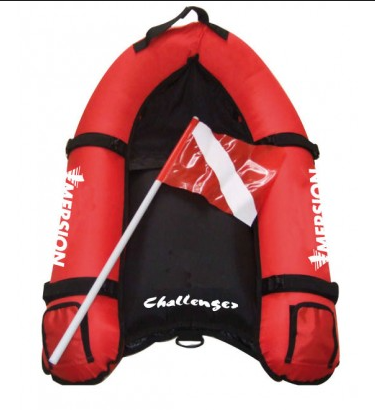
Imersion Challenger Spearfishing Inflatable Dive Float

Imersion Challenger Float Board (SMB)

£103.99

The brand new Imersion Challenger Float Board is a must have for shore diving. The float  can easily store spearfishing or diving gear for a day’s diving and due to the hydrodynamic design is easy to tow in the water!

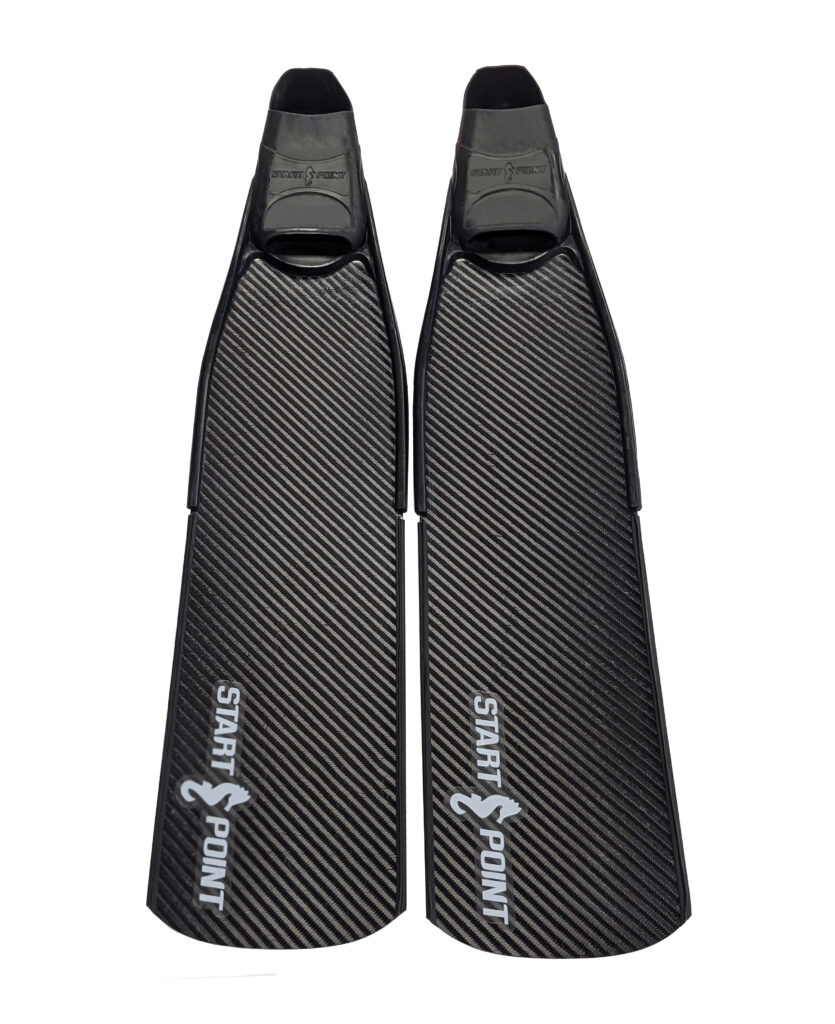
Start Point Carbon fins black with white logo

Start Point Carbon Fins

£359.99

If you are interested in taking your spearfishing to the next level with the most efficient diving equipment, these carbon fins are for you.

The carbon blades are the absolute top of the range and we believe you won’t find any better at this price point.

Posted on Leave a comment

Equalisation Struggles as a Beginner Diver: What Helped Me (and Might Help You Too)

My First Scallop Dive

I was buzzing in my brand new wetsuit — warm, comfy, and ready for my first proper spearfishing mission to get scallops. But as soon as I hit the water, things didn’t go quite as planned.

The sea was choppy, I was nervous, and my right ear just wouldn’t equalise. What started out feeling exciting quickly turned into a frustrating and painful learning curve.

If you’re new to freediving or spearfishing and battling with equalisation like I was, I hope this post helps you feel a bit more prepared — and reminds you that you’re not alone.

What Went Wrong – The Ear That Threw Me Off

From the start, I felt tense. The surface was rough, and I was already on edge. It was a new spot and I just jumped in. Then I noticed my right ear wasn’t clearing properly. I kept trying, but it just got more painful — and that pain made me even more tense.

A few times after my duck-dive I found myself spiralling down into the murky depths, kicking and feeling lost under the water is a scary place to be in.

Suddenly I wasn’t just trying to dive — I was trying not to panic. Not the best headspace to be in when you’re meant to stay relaxed and controlled underwater.

What Helped – Slowing Everything Down

Eventually, I had a little chat to myself and slowed everything right down.

  1. I gave myself more time to breathe up — resting on the surface longer before each dive to feel properly calm and ready.
  2. Ease into it with smaller, gentler dives as you make your way to your spot — treat it like a warm-up, not a race.
  3. If something feels off or starts to hurt, pause. I stopped trying to “push through” and instead focused on relaxing and resetting.
  4. The goal is to enjoy it — not just endure it. When you feel confident in the water, everything gets easier, especially staying relaxed.

I realised I was putting pressure on myself without even noticing. Donning my sexy new Aspetto wetsuit, I wanted to dive like pro — going deep and staying down for ages. But skills like that take time. He’s been doing this for ten years. I was trying to match a level that I hadn’t trained for yet, and it was stressing me out. Letting go of that pressure was a turning point.

It’s funny — I thought equalisation was all about technique. But the biggest change came from relaxing my body, calming my mind, and easing back into the water.

“People forget equalising is 99% about relaxation and feeling comfortable.”

Freedive Menorca

Final Thoughts: Go Easy On Yourself

Spending time in the water made all the difference. Seeing the sea in all its states — calm, choppy, rising, or still — helped me build confidence and a deeper respect for the conditions. Getting in when it was a bit rough made me realise that when I’m fit, healthy, and feeling strong, I give myself the best chance of working with the ocean rather than against it. In the early days, I was tense in the water because I didn’t feel strong, and that made it hard to relax and equalise properly.

Checking out the spot beforehand really helped with peace of mind too — I liked going when the tide was low so I knew it was coming back in, which made me feel safer, like I wouldn’t get washed out to sea. Finding a spot I loved and returning to it again and again also helped; getting familiar with it in different conditions broke down fear and built a real sense of comfort. Even diving in pea-soup visibility days — where you can barely see your hand in front of your face — taught me a lot.

Those murky sessions made me appreciate the crystal-clear days even more. Over time, what once felt intimidating slowly became something I could genuinely enjoy, not just endure.

Posted on 1 Comment

Crispy Sea bass with Zingy Lime & Spring Onion

One of our favourite Jamie recipes — a proper classic.

We keep coming back to this one. It’s simple, quick, and packed with flavour — no faff, just the good stuff. A handful of ingredients, a hot pan, and a whole sea bass is all you need for something seriously impressive.

If spearfishing your own sea bass doesn’t impress your favourite person, this dish definitely will. Trust us.

Ingredients

Serves: 2
Time: 20 minutes
Difficulty: Easy

– Whole seabass, scaled and gutted
– Thai red curry paste
– A bunch of spring onions
– A small bunch of coriander
– 1 lime
– Olive oil
– Sea salt & black pepper

Optional extras:
– Jasmine Rice
– Cold beer (larger)

Instructions

  1. Prep the greens:
    Trim and halve your spring onions, then finely slice them lengthways. Chuck them in a bowl of ice-cold water — they’ll crisp right up. Pick off the coriander leaves and keep the stalks for stuffing.
  2. Score & season the bass:
    Grab a sharp knife and make cuts across the skin of the seabass about 2cm apart. Rub curry paste all over the fish — inside and out — making sure it gets into every nook and cranny.
  3. Stuff it up:
    Pack those coriander stalks into the belly of the fish. Season generously with sea salt and cracked black pepper.
  4. Sear it golden:
    Heat a tablespoon of olive oil in a large non-stick pan over medium-high heat. Add the seabass and cook for 3–4 minutes each side, or until the skin is dark golden and the fish is cooked through.
  5. Plate it like a pro:
    Drain the spring onions and coriander leaves, then pile them up on a plate. Sit the seabass on top and drizzle over any spicy oil from the pan. Finish with a grating of lime zest and serve with lime halves for squeezing.

🔥 Pro tip:
This dish loves a side of jasmine rice or a cold beer on a sunny day.

Posted on Leave a comment

Meet the Team: Barcley

Barcley

At Start Point Spearfishing, we believe in more than just catching fish—we believe in forging deep connections with the ocean. And no one embodies this ethos more than our founder, Barcley. From his first spark of inspiration on a Devon beach to the meditative dives that now define his life, Barcley’s story is one of passion, adventure, and respect for the sea.

The Moment That Started It All

Over a decade ago, Barcley and his friend Joe PK were sitting on the beach below Start Point Lighthouse, soaking in the last light of the day. As the sun dipped toward the horizon, a figure emerged from the water, silhouetted against the golden sky—speargun in one hand, a seabass in the other. That moment ignited something deep inside them. The seed was planted, and before long, spearfishing became an obsession, a lifestyle, and eventually, the foundation of Start Point Spearfishing.

Why Spearfishing?

For Barcley, spearfishing isn’t just about catching fish—it’s about presence, peace, and escape.

“The moment my face touches the water, my mind is instantly at peace. Whether I’m hunting to feed my family or simply diving to decompress from the stresses of life, the ocean demands my full attention. The noise of the world disappears, and I’m left with nothing but the rhythm of my breath and the movement of the sea.”

It’s not just a sport—it’s a form of meditation, a way to reset, and a reminder that life above the surface should be lived with the same presence and intention as time spent below it.

A Dive to Remember

When asked about his favorite spearfishing spot, Barcley’s eyes light up as he recalls a small reef just off Strete in Devon. Getting there is an adventure in itself, but the effort is always worth it.

“One late afternoon, as the sun cast a fiery orange glow over the water, I found myself lying on the seabed among the kelp. I rolled onto my back to watch the light dance through the waves when suddenly, it started to rain. Each drop sent ripples across the surface, refracting the sunlight and filling the underwater world with shimmering golden beams. Time stood still. I have no idea how long I stayed there, mesmerized.”

It was a moment so profound that years later, working a stressful desk job in Oxford, he would start each day by watching this video to transport himself back to that dive.

The Thrill of the Hunt

When it comes to the ultimate underwater treasure hunt, lobsters take the crown.

“No matter how many I find, spotting one hiding under a ledge or backed into a cave never gets old. It’s a rush, a challenge, and even more rewarding when I decide to leave one behind. For me, it’s about the discovery, not just the catch.”

As for his favorite meal from the ocean? The elusive John Dory remains an unmatched delicacy, but his go-to catch-and-cook favorites are mullet and scallops—quick, easy, and best enjoyed fresh off the fire, right by the sea.

One of my favourite recipes is slow baked Grey Mullet.

Favourite Gear

Every spearfisher has that one piece of gear that changes everything. For Barcley, that game-changer was a stretchy weight belt. “It might sound small, but switching to a stretchy weight belt completely transformed my diving experience. It moves with me, keeping everything secure without restricting my breath-hold or movement. Once I tried it, I could never go back.”. A summer staple for me is the Start Point tee.

Words of Wisdom

Spearfishing isn’t about records or trophies. It’s about the experience, the connection, and the lessons the ocean teaches us.

“No time spent underwater is wasted. It’s not about catching the biggest or the most—it’s about disconnecting from the stresses of land life and reconnecting with Mother Ocean.”

At Start Point Spearfishing, we’re not just about the hunt; we’re about the journey. And with Barcley leading the way, we can’t wait to share the adventure with you

Posted on Leave a comment

Start Point Spearfishing Open Day – 13/08/23

Spearfishing Beach Paella

We are hosting an open day at the Start Point Spearfishing HQ in Plympton on Sunday 13th August on behalf of the UK spearfishing team and you’re all invited! Join us for an afternoon of demonstrations from Joe PK and Daniel Mann on how to rig your spearguns and make your own spearfishing bands, followed by a live raffle of some of our best selling gear!*

Chef Barcley’s freshly foraged scallop and lobster paella will be sure to tantalise your taste buds and will be available all afternoon so why not drop in and give it a try! The Spearo Hangout podcast trio will also be in attendance offering live commentary of the days’ events!

Why:

To get UK spearfishing men and women together to learn (live demonstrations), laugh and be merry (paella and drinks available). Funds raised from the live raffle will go towards supporting the UK spearfishing team to compete in Spain.

Where:

Start Point Spearfishing HQ in Plympton. See full address here.

When:

Sunday 13th August from 12:00 – 16:00. Paella served from 13:00 – 15:30. Live raffle will be called at 15:30.

How much:

It’s completely free to come along and watch the demonstrations. Raffle tickets are £5/ticket and can be bought in advance or on the day, paella will cost £7/portion and soft and alcoholic drinks available for all – we simply ask for a donation.

The Raffle:

At 15:30 we will be be calling the live raffle where you can be in with a chance of winning some of the below epic spearfishing prizes! Money raised from the raffle will go towards supporting the UK spearfishing team to compete in Spain. Raffle tickets can be bought on the day, however for those of you that cannot make it and still want to participate you can buy your tickets here! The below products will be up for grabs in the raffle. Buy your ticket now or on the day.

Raffle prizes include:

  • Start Point Labrax 5mm complete wetsuit
  • Start Point T Shirt
  • 5m float line
  • Start Point torpedo float
  • x2 £10 vouchers
  • Start Point stiletto knife 
  • IST 40L dry bag 
  • Start Point 3mm socks

Can’t make it but still want to participate in the raffle?

No problem! You can buy raffle tickets online by clicking on this link here. There will be a live feed of the raffle on our fb page here.

If you have any questions please don’t hesitate to give us a call or send us a Whatsapp on 07518 784 002.

*Funds raised from the live raffle will go towards supporting the UK spearfishing team to compete in Spain!

Posted on Leave a comment

How to setup a new account

Are you an existing customer? You have likely noticed that we have a brand new website! All you need to do now is to create a new account – don’t worry, all of your existing orders are still with us.

To create a new account, head over to our account page. Simply register with us by creating a username, and inputting your email address. A password will then be sent to your email address. It’s that simple. Once you’ve received your password you can then continue to shop with us as per usual.

If you find that you have any issues during this process then don’t hesitate to give us a call on 07518 784002.